
What Happens When Pipes Freeze
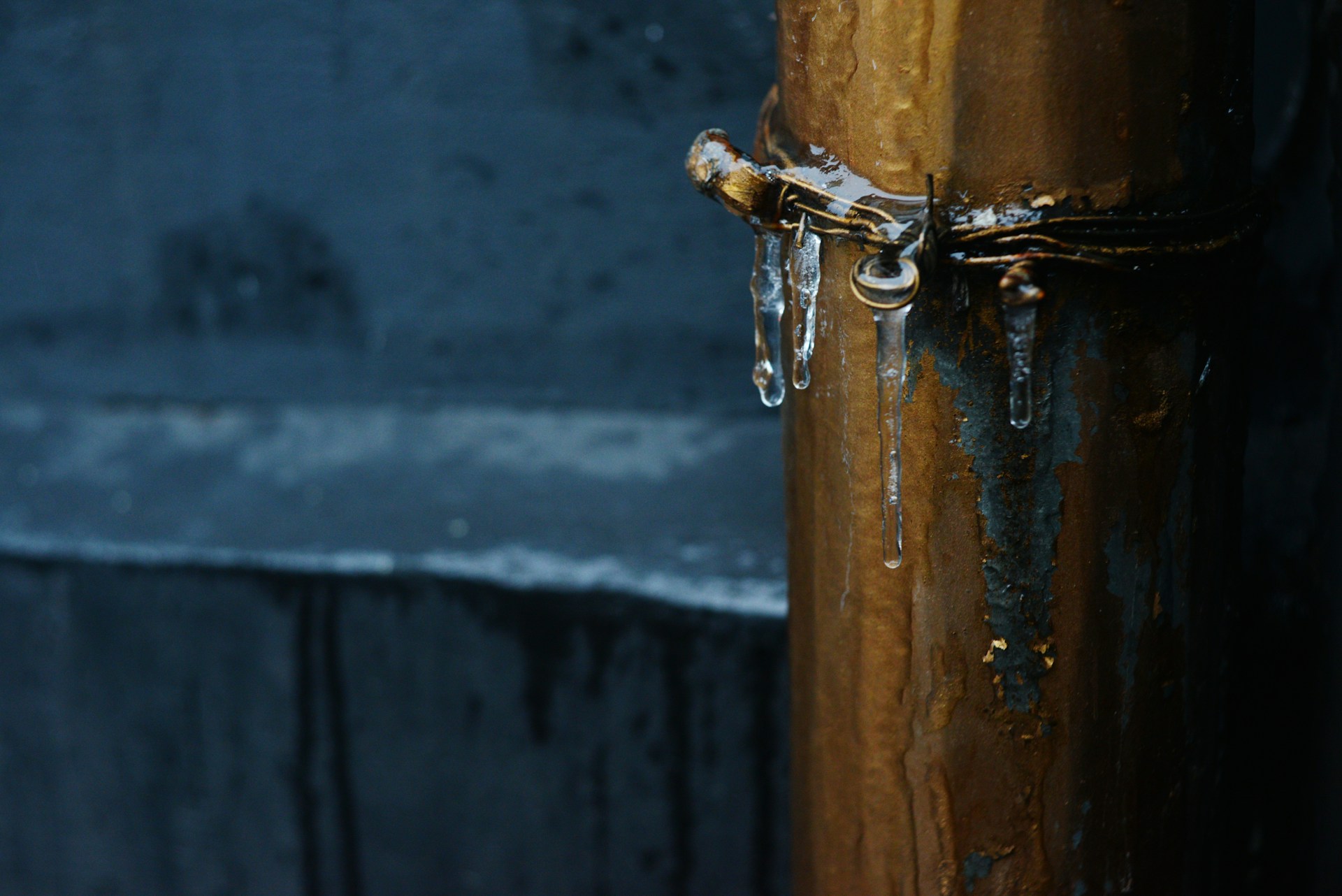
Cold weather often raises a practical question about household plumbing: what happens when pipes freeze. In many homes, water lines run through exterior walls, unheated basements, crawl spaces, or attic areas where temperatures can fall below freezing for extended periods. When water inside those pipes turns solid, the plumbing system responds in a predictable way. The outcome follows a clear physical sequence.
Ice expands inside the fixed space of a pipe
The central mechanism behind frozen pipes is expansion. Water expands as it freezes.
Inside a plumbing pipe, water is contained within a rigid, enclosed tube. When part of that water turns into ice, it occupies more space than it did as a liquid. Because the pipe walls restrict outward movement, pressure increases inside the sealed section.
If enough ice forms within a confined segment, the internal pressure can exceed the structural limit of the pipe material. When that limit is exceeded, the pipe splits or cracks. The fracture may occur near the frozen area or in an adjacent section where pressure concentrates.
This expansion-driven pressure is the primary reason pipes break during freezing conditions.
Reduced or stopped water flow reflects an internal blockage
One of the clearest signs of freezing is a change in water flow. A faucet that normally runs at full pressure may slow significantly or stop entirely, while other fixtures in the home continue operating.
This happens because ice forms a solid barrier inside part of the pipe. Water cannot pass through the frozen section, so flow is restricted beyond that point. The remainder of the plumbing network continues functioning if it remains above freezing temperature.
In most cases, the only observable change is the interruption in flow. The freezing itself takes place inside the pipe, out of view.
Internal pressure rises within the enclosed plumbing system
Household plumbing remains filled with water under steady internal pressure, even when no taps are open. That stored pressure allows water to move immediately when a fixture is turned on.
When freezing begins in one area, expanding ice reduces the available space for liquid water. Because water does not compress in any meaningful way, the expanding ice forces pressure to rise within the enclosed segment.
That pressure spreads along the pipe. Materials such as copper, plastic, and steel respond differently to stress, but all have structural limits. If the internal force exceeds the pipe’s capacity, a crack forms along the wall or seam.
The visible leak often appears after temperatures rise and the ice melts. Once liquid water moves freely again, it escapes through any fracture created during the pressure buildup. Similar pressure-related behavior explains why appliances overheat when internal systems cannot release heat efficiently.
Freezing and bursting are separate outcomes in the same sequence
Freezing does not automatically result in a burst pipe. The freezing process and the structural failure are related but distinct stages.
If expansion remains limited or the pipe material absorbs the stress, the pipe may remain intact. If pressure exceeds the material’s strength, a fracture develops. The determining factor is not the cold air itself but the internal pressure caused by expanding ice.
Because the crack forms during the pressure phase, visible leakage often occurs only after thawing allows water to circulate again.
Exposure to sustained cold determines how the system responds
Frozen pipes occur when sections of plumbing are exposed to temperatures below freezing long enough for the water inside to solidify. Pipes located along exterior walls or in unheated areas are more likely to experience these conditions because they are closer to outdoor air temperatures.
The final result depends on how much water freezes within a confined segment and the structural characteristics of the pipe material. These variables influence whether the system resumes normal flow after thawing or whether a structural crack becomes apparent.
In all cases, the underlying mechanism remains the same. Ice expands inside a closed pipe, pressure rises, and the material responds to that internal force.
Putting it all in context
When pipes freeze, the process follows a consistent physical pattern. Water turns into ice. Ice expands inside the enclosed pipe. Internal pressure increases. The pipe either withstands that pressure or develops a crack. Sometimes the only effect is a temporary interruption in water flow. In other situations, structural stress becomes visible after thawing. It is a straightforward interaction between temperature, water, and a closed plumbing system.
Homes have a way of giving you things to wonder about. Explore more explanations for the sounds, smells, changes, and problems you notice around the house.