
Why Do Eyes Water?
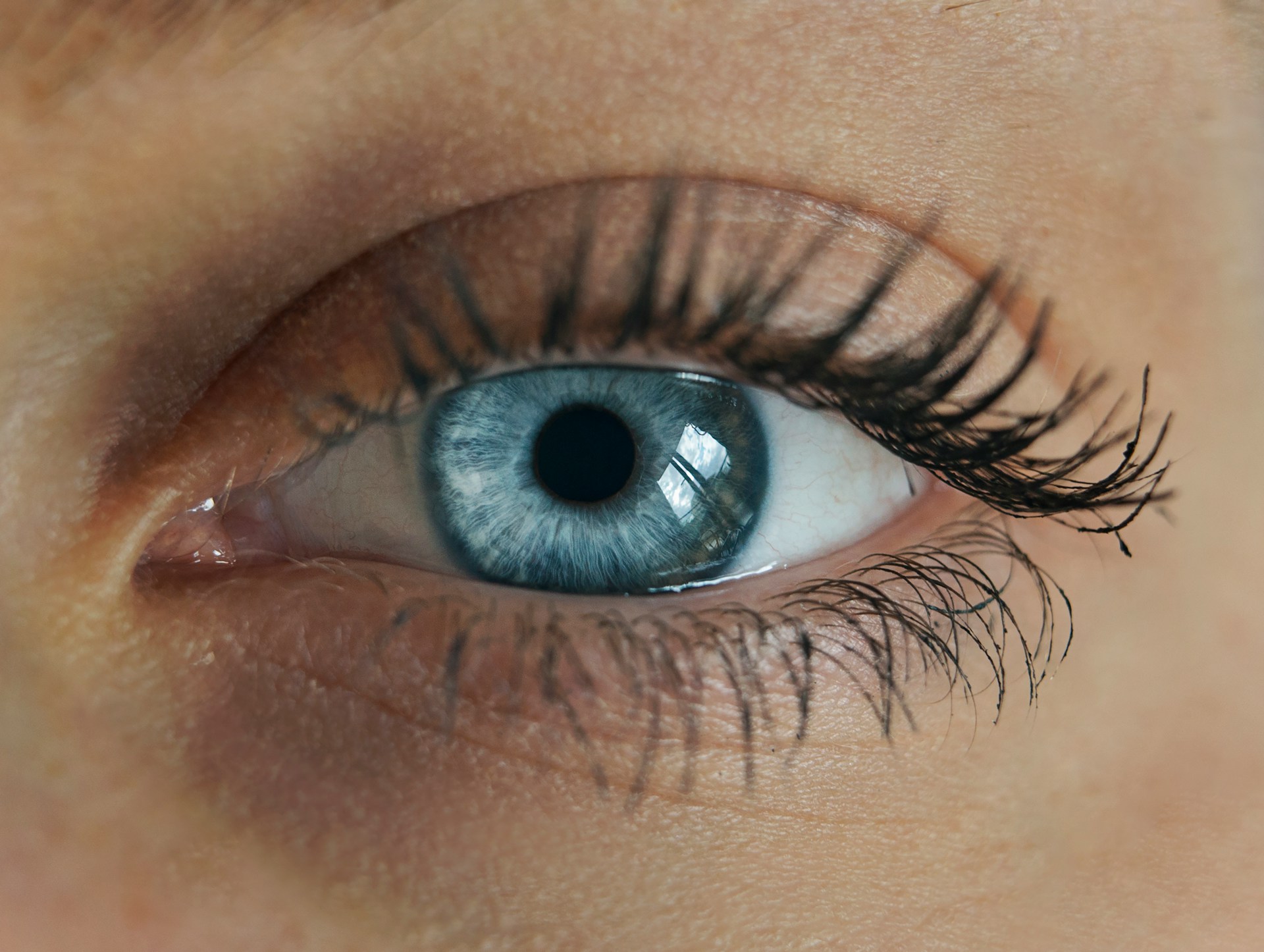
You step into a cold wind and, within seconds, your eyes are streaming. The same thing happens halfway through chopping an onion or the moment an eyelash gets caught. You aren’t crying, but your eyes have switched on the same tear system for a different reason: protection.
Your eyes are always covered by a thin layer of tears. Each blink spreads that tear film across the surface, keeping it moist and helping clear away tiny particles. When the eye detects irritation or starts becoming too dry, nerves in its surface signal the tear glands to release more fluid.
That sudden wash of extra tears is what makes your eyes noticeably water.
Watering Is a Protective Overflow
Most of the time, you don’t notice your tears because they’re produced and drained at roughly the same rate. After moving across the eye, excess fluid enters tiny openings near the inner corners of the eyelids and eventually drains into the nose.
An irritant will quickly change that balance. The tear glands release more fluid to dilute or wash away whatever is bothering the eye. If the drainage system can’t carry it away fast enough, the tears collect and spill over the eyelids.
This is also why your nose may run when your eyes tear heavily. Some of that extra fluid is reaching the nose through the normal tear drainage passages.
Different Triggers Can Produce the Same Response
Dust, smoke, onion vapor, and a stray eyelash can all irritate the sensitive surface of the eye. The triggers are different, but the response is essentially the same: produce enough tears to flush the area.
Cold air and wind work a little differently. They can disrupt the tear film or make its moisture evaporate more quickly. The eye senses that its surface is drying out and responds by producing extra tears.
So the wind isn’t making you cry in the emotional sense. It’s setting off the eye’s automatic protective reflex.
Dry Eyes Can Still Become Watery
It sounds backward, but an eye that feels dry can also overflow with tears. The eye normally relies on basal tears, the steady tear film spread across its surface with every blink. That film combines watery fluid with mucus and oils. The mucus helps it spread across the eye, while the oils help keep it from evaporating too quickly.
If that balanced film breaks up or evaporates too quickly, the exposed surface becomes irritated. Sensory nerves then signal the main lacrimal gland above the outer part of the eye to release a rush of reflex tears.
That response quickly adds watery fluid, but it doesn’t come with the same proportional increase in the oils and mucus that help the normal tear film remain stable. The extra fluid may spill onto the cheek without forming the lasting protective coating the eye was missing. That’s how an eye can be dry and visibly watery at the same time.
Tears Can Also Collect When They Drain More Slowly
Extra production isn’t the only reason eyes water. Tears can also build up when they aren’t draining as quickly as usual.
Blinking normally moves fluid toward the small drainage openings beside the nose. When that drainage cannot keep pace, tears remain on the eye until they overflow. The visible result looks the same, but the balance changed on the other side: instead of tears being produced unusually fast, they are leaving too slowly.
Either way, watery eyes usually reflect the same basic imbalance. More tears are collecting on the surface than the eye can drain or hold, so the excess has somewhere obvious to go.
This article is for informational purposes only and is not a substitute for professional medical advice.