
Why Does Hair Shed?
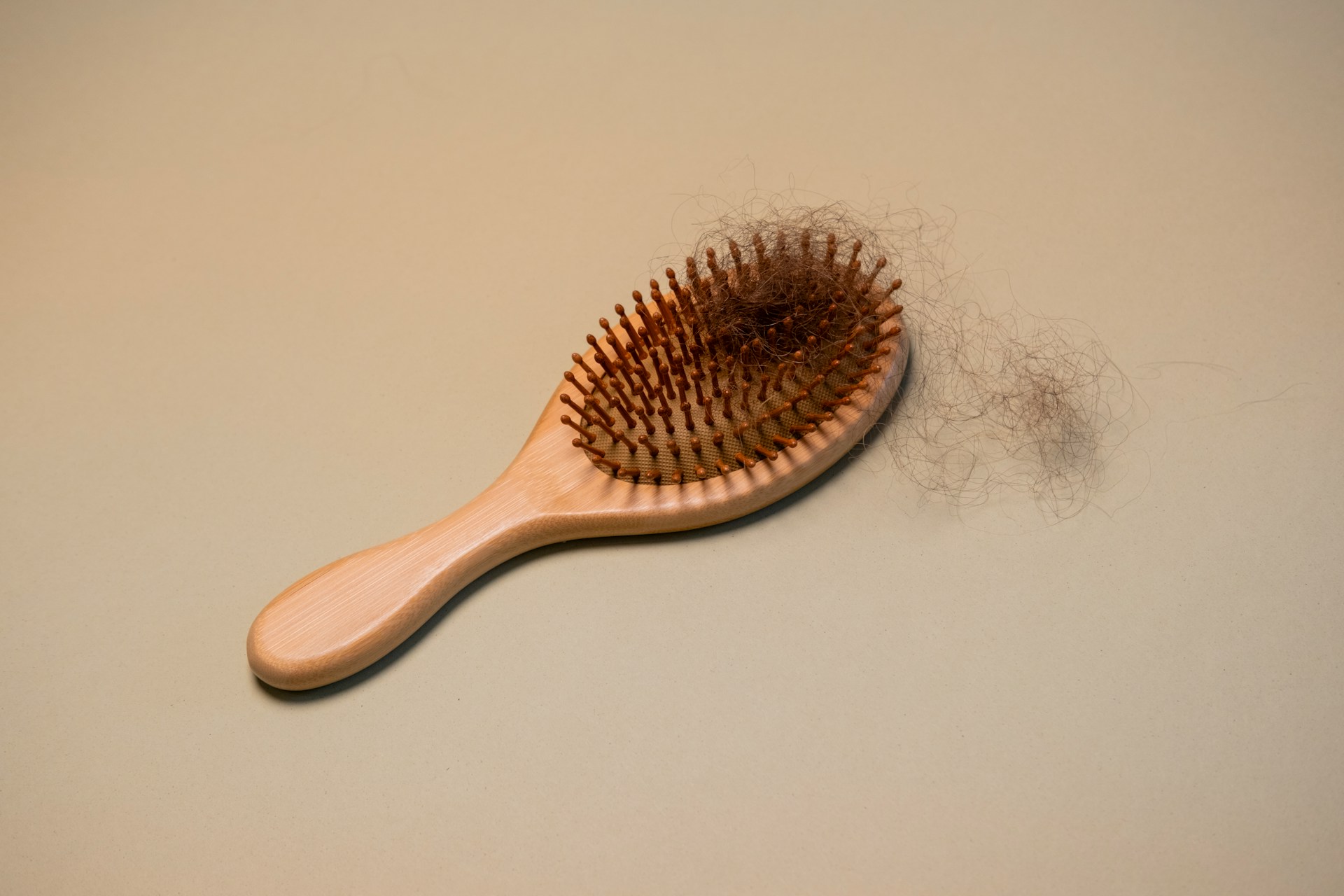
You wash your hair, look down, and there’s a clump of it in the drain. It can seem like something made all those hairs suddenly fall out, but most had already reached the end of their time on your scalp.
Hair sheds because your follicles don’t keep producing the same strands forever. Each follicle grows a hair for a period, pauses, and then resets before beginning another growth cycle. The old strand is released as part of that turnover.
A Hair Strand Can’t Renew Itself
The hair you can see and touch is made mostly of keratin, a tough protein formed as cells inside the follicle undergo a process called keratinization. By the time those cells become part of the visible strand, they’re no longer living. That’s why a strand can be cut without hurting and why damaged ends can’t heal themselves the way skin can.
As a strand gets longer, it also goes through ordinary wear from washing, movement, sunlight, friction, and styling. The follicle doesn’t repair that existing strand. Instead, it eventually ends the strand’s growth and prepares to produce another one.
Shedding is the part of the cycle that releases the finished hair.
The Follicle Stays Behind
When a hair sheds, the entire follicle doesn’t come out with it. The follicle is the tiny structure inside the skin that produced the hair, and it remains in place.
After its active growth period ends, the follicle becomes less active and the strand is held more loosely. Eventually, that hair separates and falls away. The follicle can then return to active growth and form another strand.
So shedding doesn’t automatically mean a follicle has stopped working. It often means that one strand’s turn is over while the follicle continues through its cycle.
Your Hairs Take Turns
Every follicle follows its own schedule. Some are producing new hair, some are resting, and others are releasing strands that have finished growing.
That staggered timing keeps all your hair from shedding together. If every follicle reset at once, you would lose a large amount of hair at the same time. Instead, the turnover is spread out, so old strands leave while most of the others remain in place.
It’s less like your hair is disappearing and more like individual strands are being replaced on different schedules.
Why It Looks Like The Shower Caused It
A finished hair doesn’t always drop away as soon as it separates from the follicle. It may stay tangled among the surrounding strands until washing, brushing, or running your fingers through your hair frees it.
That’s why shedding can look sudden in the shower. Washing gathers loose hairs into one noticeable clump, even though they reached the end of their cycles at different times.
The same thing happens when several days pass between washes or thorough brushing. Instead of seeing the strands leave one at a time, you see the accumulated hairs all at once.
So hair sheds because each follicle periodically ends one strand’s growth and starts the process again. What appears to be hair simply falling out is usually one visible moment in that ongoing renewal.
This article is for informational purposes only and is not a substitute for professional medical advice.