
Why Do Pupils Change Size?
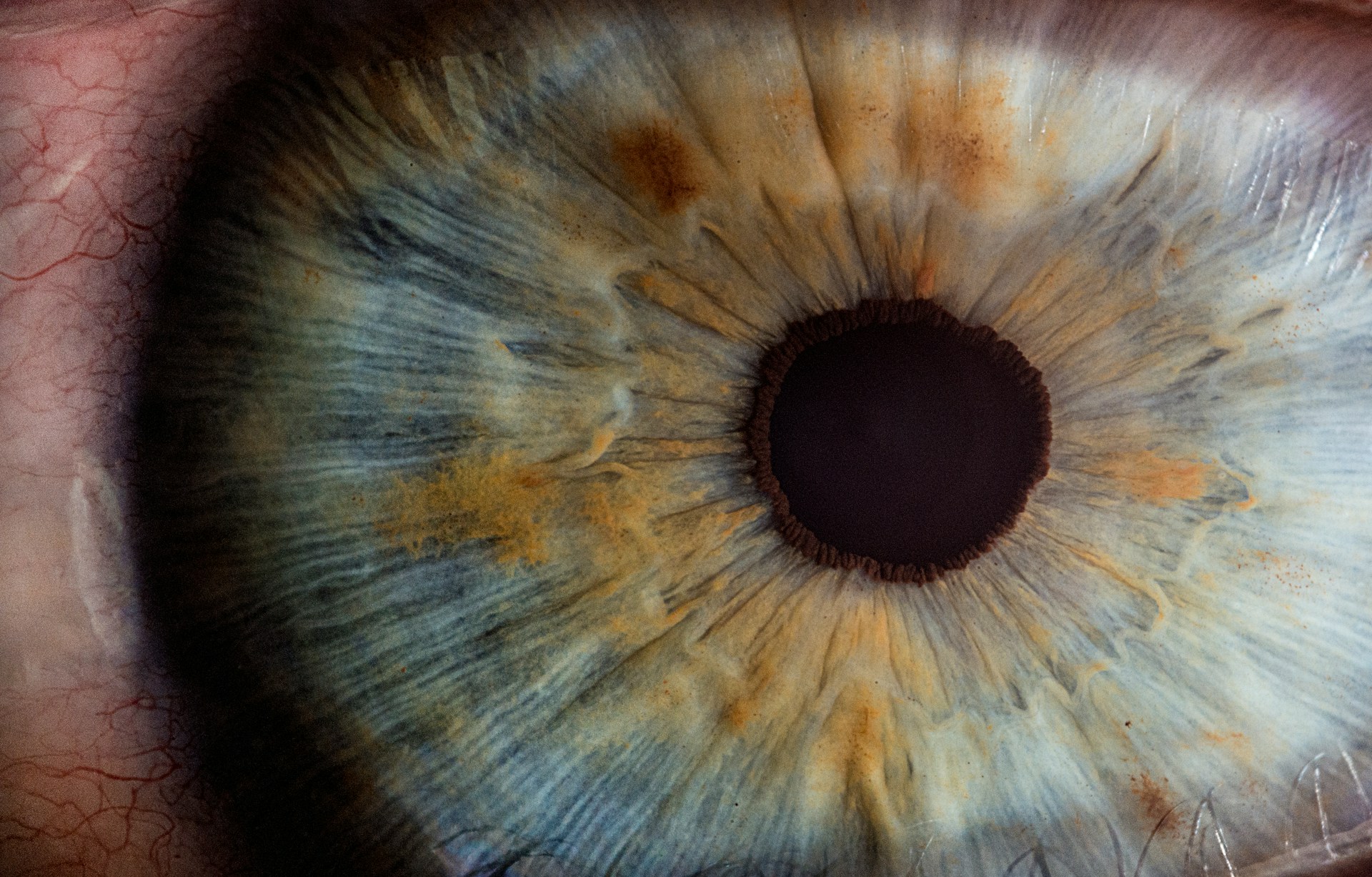
You might notice it when you catch your reflection after being in a dark room. The black centers of your eyes look unusually large, then seem to shrink when you step into brighter light.
That change is your eyes adjusting in the background. The colored part of the eye is changing the size of the opening in its center to manage the light coming in.
The Colored Part of Your Eye Controls the Change
The pupil is the dark opening in the middle of the eye. It does not have a color because it is the space where light enters.
The iris is the colored part around it. It has muscles that can make the pupil wider or narrower. So when your pupils look bigger or smaller, the iris is what is actually moving.
In a dim room, the opening gets wider. In bright light, it gets smaller. The change happens without you having to think about it.
A Wider Pupil Lets in More Light
When light is limited, a wider pupil gives the eye more light to work with. That is why your pupils may look large in a movie theater, at night, or in a room with the lights low.
Then a bright light comes on, or you walk outside, and the pupils become smaller. Less light needs to enter at that point, so the iris narrows the opening.
It happens quickly enough that you mostly notice the result, not the change itself. A photo taken with flash can make it especially obvious because your pupils may look smaller than they did just before the picture.
Looking at Something Close Can Change Them Too
Pupils also usually get smaller when you shift from looking across a room to looking at something close, like a phone or a book.
Your eyes are making several adjustments together at that moment. The lens inside the eye changes to bring the nearby object into focus, and the pupils become smaller too. A smaller opening can help make the close view clearer.
That is why pupil size is not only about whether a room is bright or dark. The eyes are also responding to what you are trying to look at.
Attention Can Play a Small Part
You may also hear that pupils change with emotion or interest. The nervous system does influence the iris, so alertness, surprise, or intense attention can affect pupil size.
But it is not a simple signal that reveals exactly what someone is feeling. Light and focus are still doing a lot of the work, often at the same time.
Pupil size changes because the eye is always making small adjustments for the view in front of it. The change can be visible, but it is usually just part of the eye working in the background.
This article is for informational purposes only and is not a substitute for professional medical advice.