
Why Do Veins Look Blue?
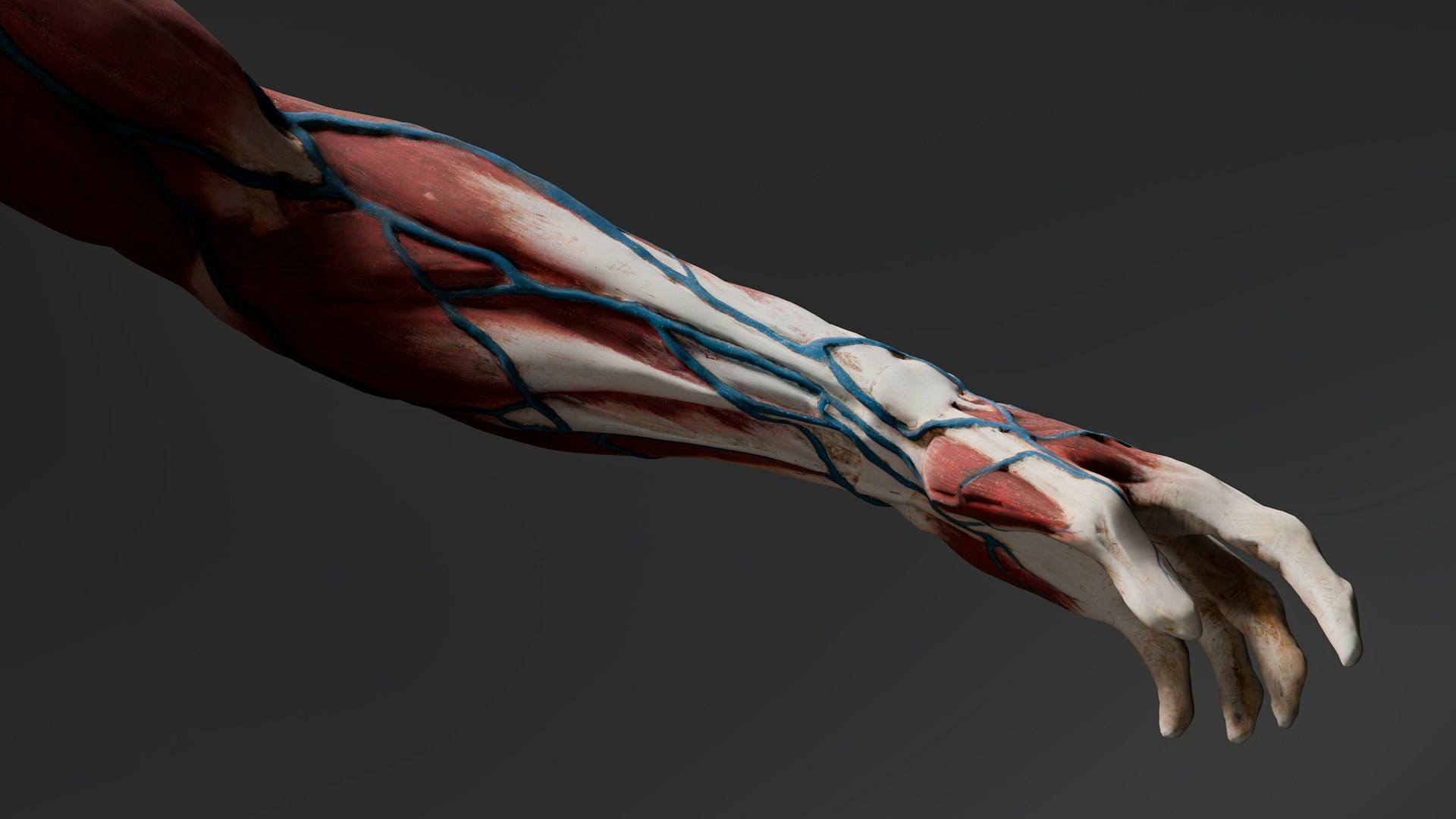
The veins you can see through your skin may look blue, but neither the veins nor the blood inside them are actually blue. Blood is always a shade of red. The blue appearance comes from seeing that blood vessel through your skin rather than seeing it directly.
It’s the way the light travels through your skin. The skin between your eyes and the vein changes the light that makes it back to you, which changes the color you see.
You’re Seeing the Vein Through Your Skin
When light reaches your skin, different colors of light behave differently. Some penetrate farther into the tissue than others, and some are absorbed more than others. By the time light from the area above a vein reaches your eyes, that difference can make the vein appear blue.
The vein beneath the surface can look blue even though it wouldn’t look blue if you could see it directly. It’s a little like looking at something through a filter. What reaches your eyes isn’t necessarily the same color you would see without anything in between.
That’s also why visible veins don’t all look exactly the same. Depending on your skin, the lighting, and how deep the vein sits, they can look blue, greenish, or even purple.
The Blood Inside Is Still Red
The blue appearance has also helped create the idea that veins carry blue blood. They don’t. Blood carrying more oxygen is a brighter red. After that blood delivers oxygen to the body’s tissues, the blood returning through the veins is a darker red. It never turns blue.
You may also recognize the blue-blood idea from anatomy diagrams, where veins are usually colored blue and arteries are colored red. That’s just a convenient way to tell the two apart in an illustration. It isn’t showing their actual colors.
Why You Can See Some Veins So Clearly
The veins that stand out on your wrist or the back of your hand are close enough to the surface for you to see them through the skin. A deeper vein has more tissue between it and your eyes, so it may not be visible at all.
This also helps explain why the color and visibility of veins can vary so much from one person to another or even from one part of the body to another. Skin and tissue affect what you see, and vein depth changes how much light has to travel through them.
So the blue you see on your wrist isn’t the color of the blood hiding underneath. It’s the color that vein appears to be when you’re looking at it through your skin.
This article is for informational purposes only and is not a substitute for professional medical advice.