
Why Does Traffic Slow Down Without an Accident?
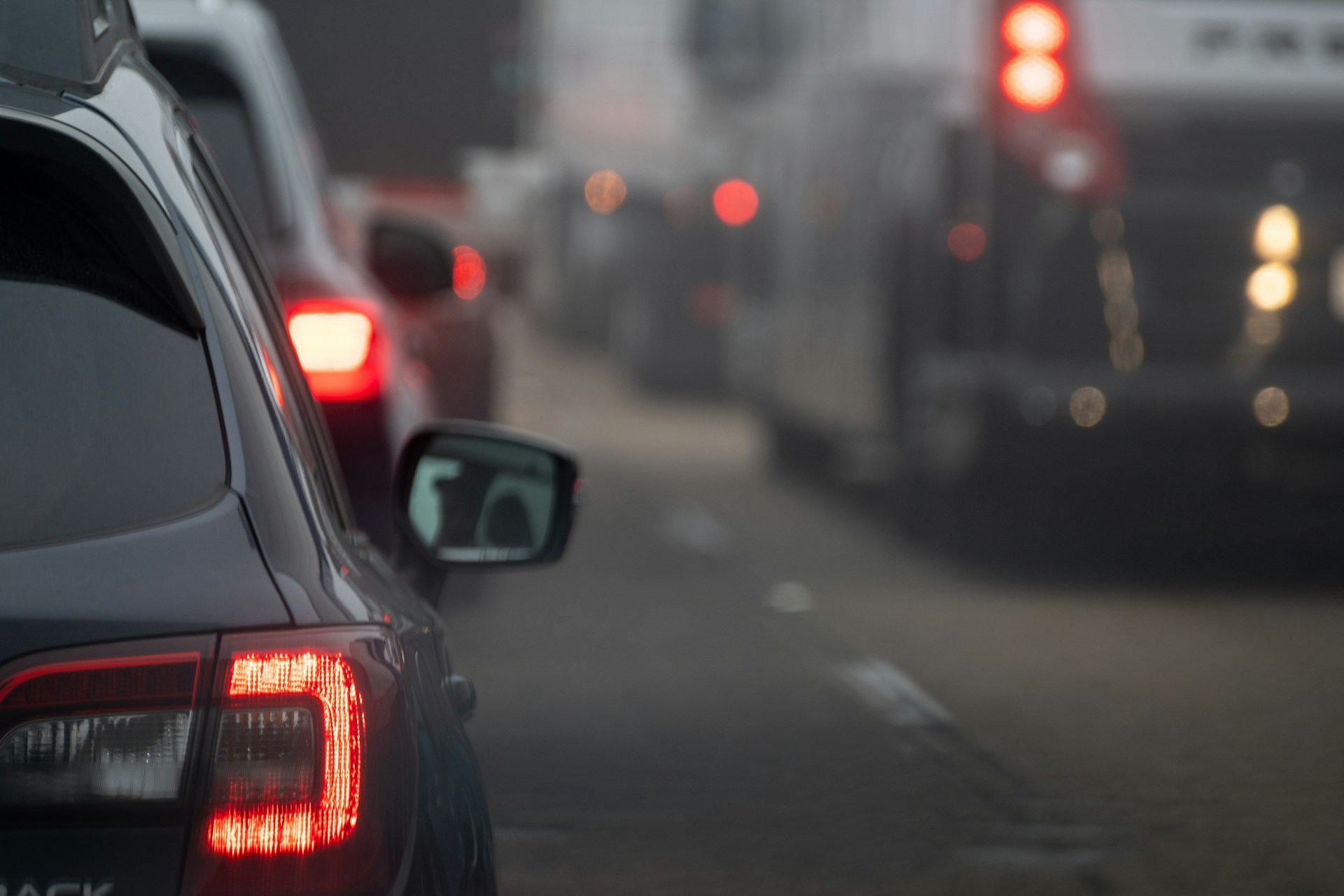
Traffic can slow down even when there is no accident. You crawl along for several minutes, expecting to pass a crash or blocked lane, only to find that the road ahead is completely clear. The slowdown may have started with something as small as one driver tapping the brakes. When the road is busy and vehicles are close together, that slight change can make the drivers behind them brake too. Farther back, the adjustment can grow into a much larger slowdown, even after the original cause has disappeared.
A small slowdown can grow as it moves backward
Traffic does not move at exactly the same speed from one car to the next. Drivers accelerate, brake, change lanes, and adjust the distance between their vehicles. Most of those small changes have little effect when the road is relatively open.
Those small speed changes have a bigger effect when the road is crowded. Suppose a car slows briefly because another vehicle moves into its lane. The next driver reacts and slows too, followed by the car behind that one. Because each response happens a little later, the effect can continue moving backward through traffic.
The backup can remain after the original cause is gone
Later drivers may reach that stretch of road after whatever caused the first speed change is already over. They encounter the resulting congestion rather than an obstruction they can see.
These are often called phantom traffic jams. The name does not mean the slowdown had no cause. It means there may be no accident, blockage, or other obvious obstruction to explain the congestion.
Busy roads leave less room for speed changes to fade
The amount of space between cars affects how far a slowdown can spread.
With plenty of space between vehicles, one car can slow without producing much of a reaction behind it. Other drivers have more distance in which to adjust, so the change can fade after affecting only a few vehicles.
On a crowded highway, cars are closer together, so one driver slowing is more likely to make the driver behind them slow too. A minor reduction in speed can pass through many cars, producing the familiar pattern of braking, creeping forward, accelerating, and braking again.
Merges and curves can start a slowdown without blocking the road
A merge, curve, hill, or lane reduction can cause drivers to change speed when traffic is heavy.
At an on-ramp, for example, vehicles entering the highway change the amount of space available between cars already in the lane. Nearby drivers adjust their speed as the traffic combines.
None of these situations has to stop traffic completely. When enough vehicles are already using the road, a series of small adjustments can be enough to create a backup.
The slowdown and the cars are moving in different directions
Cars keep moving forward, but the slowdown can travel backward through the line. Drivers at the front eventually get past it, while more cars arrive from behind and take their place.
Once drivers stop braking so often and the traffic spreads out a little, the backup can disappear on its own. The road may start moving normally again even though there was never an accident or anything blocking the lanes.